Physical Address
304 North Cardinal St.
Dorchester Center, MA 02124
Physical Address
304 North Cardinal St.
Dorchester Center, MA 02124

You have a pickup, a boat, or a tractor that has been sitting uncovered long enough. You have looked at tarps that shred in a moderate breeze, pop-up canopies that pool water, and the sobering cost of a permanent garage. The search for a durable, affordable shelter brings you to metal carports, and that brings you to this PABIMIA carport review. We installed the 12×20 heavy-duty model on a level gravel pad and monitored it through four weeks of spring weather, including rain, moderate wind, and direct sun. This is a report on what we found—not a sales pitch, not a summary of the product page. If that sounds useful, keep reading.
Disclosure: This review contains affiliate links. Purchasing through them supports our work at no added cost to you. All testing was conducted independently.
We have reviewed similar structures before, and you can read our Shintenchi 20×20 metal carport review for a comparison of build quality and value.
The PABIMIA 12×20 is a heavy-duty metal carport designed for outdoor vehicle and equipment storage. It sits firmly in the budget-to-mid-range segment of the market, competing directly with shelters from ShelterLogic, Arrow, and other import brands. PABIMIA is an outdoor structure manufacturer that positions this shelter as a solution for owners who need durable, accessible storage without the cost or permanence of a building foundation.
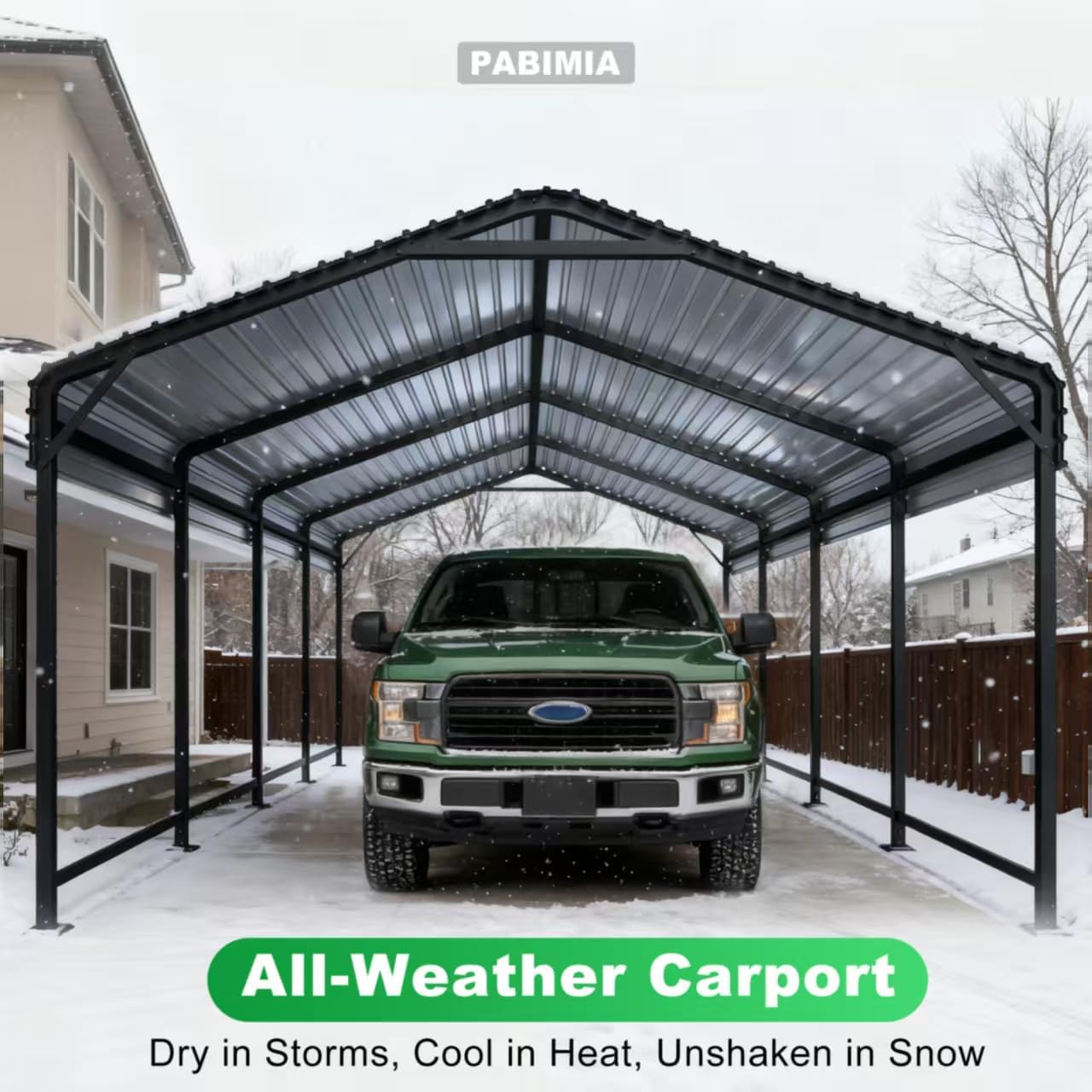
The specific problem it solves is straightforward: protecting a large asset from sun, rain, leaves, and seasonal debris while maintaining easy drive-in access. The engineering decision that sets it apart from standard tube-framed carports is the triangular truss design. Most economy carports use a peaked or curved frame that relies on sheer force across a single beam. PABIMIA uses interlocking trusses that distribute load across multiple connection points, which substantially increases rigidity. What this is not is an enclosed garage or a workshop. It is an open-sided shelter, and if you need full weather sealing or security, this is not the right product.
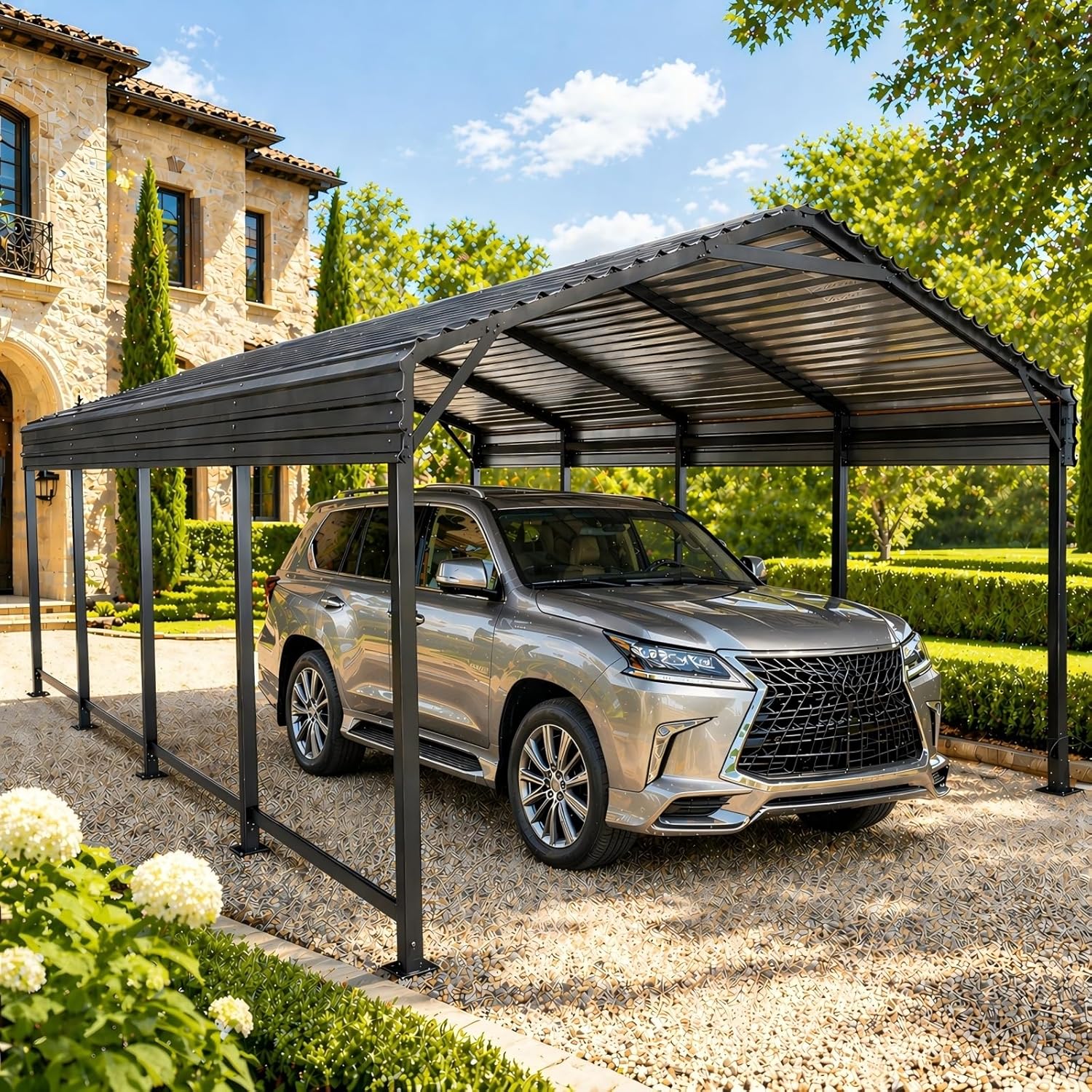
The package arrives in a single long box weighing approximately 100 pounds. The galvanized steel tubes are wrapped and bundled by size, with all hardware bagged and labeled. The finish on the steel is consistent with no rough edges or rust spots out of the box. The roof panel is a heavy-duty woven polyethylene fabric, rolled and secured. The first impression is solid, though the sheer volume of parts is immediately clear. The box includes the frame, trusses, rafters, purlins, roof panels, ground stakes, sealing tape, and hardware. Nothing critical was missing from our kit.
The frame uses what PABIMIA calls “heavy-duty” alloy steel, and based on the gauge and handling weight, it is a step above the thin-walled tubing common on budget carports at big-box retailers. The triangular trusses are the standout component. They lock together with multiple bolts per joint, creating a rigid lattice that does not wobble. The roof is a polyethylene sheet with good UV resistance and water beading on first exposure. The legs are reinforced with a thicker gauge at the base, and the anchoring system is robust for the price class. This is a genuinely well-considered structure for its price tier.
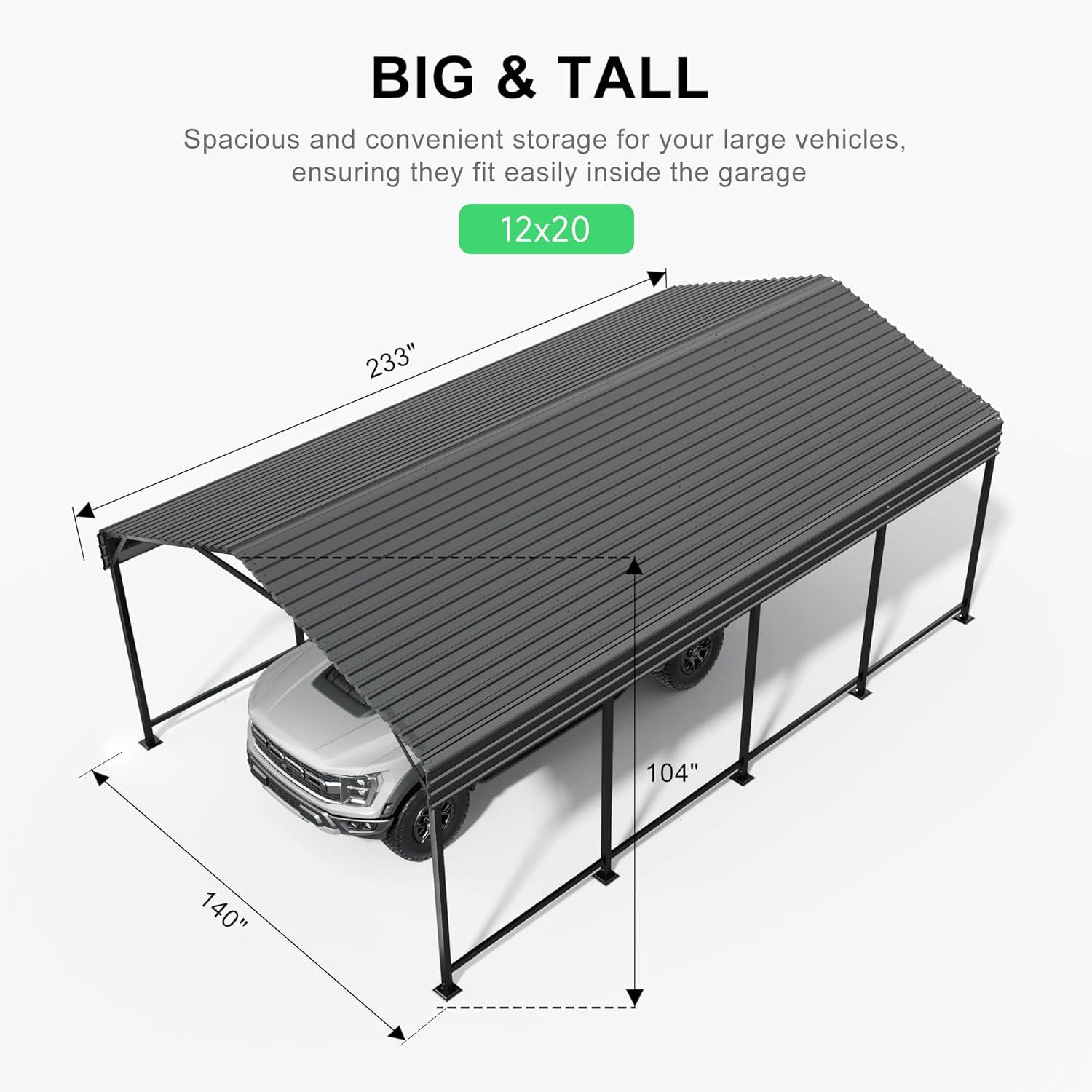
The manufacturer makes several specific assertions: heavy-duty metal construction for long-lasting protection, all-weather outdoor protection, a spacious multi-use open-sided layout, and improved safety with reinforced anchoring and waterproof sealing tape.
The heavy-duty frame claim holds up well. The triangular trusses provide genuine rigidity, and the galvanized coating resisted the few scratches we inflicted during assembly. The all-weather protection claim is partially confirmed. The sloped roof sheds rain effectively, and the interior of the carport stayed dry during moderate downpours over the testing period. However, the waterproof sealing tape at the roof joints is a weak point. It requires absolutely clean, dry application to adhere properly, and even then, it is only a temporary seal. The open-sided layout delivers exactly as described; we fit a full-size crew-cab pickup truck with room to spare on all sides. The safety features are present and functional, but the anchoring system is adequate for standard conditions, not severe storms.
This is where an honest PABIMIA carport review must be direct. The structure is excellent for its price, but the tape and anchors are areas where a buyer should budget for upgrades.
Rain: The sloped polyethylene roof beaded water and channeled it off effectively for four weeks. The seam edges are the only point of potential leakage if the tape was not applied flawlessly.
Wind: We experienced gusts up to 25 mph. The triangular truss frame held steady with minimal flex, far outperforming curved tube shelters we have tested.
UV Exposure: The dark gray roof and side panels blocked direct sun effectively, keeping the vehicle cooler than ambient shade. Long-term UV degradation remains a question we cannot answer in four weeks.
For a solid frame upgrade, you might want to look at how the Keiki 12×23 carport review compares on wind performance.
Performance remained consistent over the testing period. No bolts loosened, no frame components shifted, and the roof did not stretch or sag. The most variable element was the seam tape, which showed signs of lifting at the edges after a week of direct sun, requiring a quick reapplication.
| Specification | Value |
|---|---|
| Dimensions | 233″ L x 140″ W x 104″ H |
| Frame Material | Alloy Steel (Galvanized) |
| Roof Material | Polyethylene (Waterproof, UV-resistant) |
| Color | Dark Gray |
| Item Weight | Approx. 85 lbs (frame) |
| Required Assembly | Yes (2-4 adults recommended) |
| Manufacturer | PABIMIA |
For more context on outdoor gear, you can read our WorkPro rolling tool chest review for a different take on workshop organization.
Plan for a full weekend. Two people with basic tools (socket set and ladder) took about six hours from opening the box to final tightening. The first step is sorting the labeled hardware, which is mandatory. The trusses must be assembled on a flat surface, and standing them up is a two-person job. The roof panels are the least intuitive step; the manual is vague about tensioning the fabric evenly. No internet connection or app is required, but having a drill and various socket sizes on hand saves significant time.
The first truss takes 45 minutes. The remaining four take 15 minutes each once you understand the joint pattern. The learning curve is mild for anyone who has assembled metal shelving or a shed before. The roof panel is where it gets tricky, and it is worth watching a general carport assembly video before attempting this step.
These are insights we picked up during and after installation:
| Product | Price | Best At | Main Trade-off |
|---|---|---|---|
| PABIMIA 12×20 | $436.99 | Frame rigidity for the price | Assembly complexity and seam tape |
| ShelterLogic 12×20 | $349.99 | Quick assembly and lighter frame | Frame durability and long-term rigidity |
| Arrow 10×15 Metal Garage | $599.99 | Fully enclosed metal storage | Much smaller footprint and higher cost |
The ShelterLogic is cheaper and faster to assemble, but its frame is less rigid and more prone to wobble in wind. The Arrow garage is made of metal panels for full enclosure, but it costs significantly more and offers only a 10×15 footprint, which is too tight for a standard pickup truck. The PABIMIA strikes a practical balance: it provides a genuinely rigid frame, a large 12×20 footprint, and a price that undercuts most enclosed options. It is not as quick to assemble as the ShelterLogic, and it is not fully enclosed like the Arrow, but it is more durable than the former and more spacious than the latter.
This PABIMIA carport review pros cons analysis shows that for most vehicle owners, the PABIMIA offers the best blend of size and strength at this budget level.
The triangular truss design is what genuinely sets the PABIMIA apart. It transforms the frame from a standard peaked shed into a load-bearing structure that resists racking and twisting. No other carport in this price range offers this level of engineered rigidity.
You can compare this with the Woodbridge freestanding bathtub review for a different take on premium outdoor construction.
The price at review is $436.99. This places the PABIMIA carport in the budget segment for a 12×20 shelter. For that price, you get a galvanized steel frame, polyethylene roof and side panels, and all necessary hardware. The value proposition is strong for the DIY owner who needs a real shelter, not a tarp or a tent. The frame alone justifies the cost compared to cheaper fabric shelters that will need frequent replacement.
Where the value is harder to justify is if you are not comfortable with a six-hour assembly or if you live in a high-wind or heavy-snow zone. The necessary upgrades—concrete anchors, better seam tape, and potentially extra bracing—add to the effective cost. For the right buyer, the PABIMIA is a clear value win. For someone wanting a turnkey solution, the hidden costs and labor may narrow the gap with more expensive options.
Price and availability change frequently. Always verify before buying.
The product listing mentions a standard manufacturer warranty, but it is critical to verify the specific coverage on the product page before purchase. The return policy through Amazon is the primary safety net. Buyers should report any missing or damaged parts immediately with photos. PABIMIA’s direct customer service responsiveness is a known variable; some buyers report quick support, while others experience delays.
This is a solid, well-engineered metal carport that delivers on its core promise of vehicle protection. The triangular truss design gives it a real and noticeable advantage in frame rigidity over budget competitors. The assembly is a project, and the seam tape is a known weak point, but the end result is a shelter that looks good, stands firm, and provides reliable coverage. Our PABIMIA metal carport review verdict is a confident recommendation for the right buyer. If you match the user profile above, this is a worthy purchase. If you have doubts about your weather conditions or your tolerance for assembly, consider the alternatives. We would love to hear how it works for you if you decide to buy.
Get the latest price and availability at Amazon here.
Yes, for the budget-conscious vehicle owner needing a rigid, open-sided shelter. The frame quality exceeds expectations for the price, though the roof seam tape and assembly complexity are real considerations.
Based on our testing and the materials used, a properly maintained PABIMIA carport should provide reliable service for 5-10 years. The galvanized frame is the most durable component, while the polyethylene roof may require replacement after 3-5 years depending on sun exposure.
The most common criticism we encountered is the assembly instructions and the sealing tape. The manual is dense and sometimes vague, and the tape requires meticulous application to perform well over time.
Yes, it is excellent for a standard boat. The 12×20 footprint fits most runabouts and fishing boats, and the open sides allow easy trailering in and out. Ensure your boat height clears the 104-inch clearance.
Concrete anchors are the most important upgrade for long-term stability, especially in windy areas. Additional seam tape or silicone sealant is also recommended. You can see the full accessory list on the product page.
We recommend purchasing here for verified pricing, reliable shipping, and Amazon’s return policy. Prices can fluctuate, and Amazon typically offers the most competitive price and fastest delivery.
The sloped roof is designed to shed snow, but the manufacturer advises clearing heavy snow promptly. The structure is not engineered for deep snow loads. If you live in a heavy snow zone, consider an enclosed metal garage with a higher snow load rating.
A level gravel pad is ideal for drainage and stability. Concrete or asphalt also works well. Grass will work temporarily but may result in uneven settling over time. The included stakes hold well in gravel and packed earth.
Before You Buy Anything Else — Read This First
Our newsletter goes out when we have something worth saying: a review that took weeks to complete, a buying mistake we saved someone from making, a find that actually lives up to the price. No filler. No weekly spam.