Physical Address
304 North Cardinal St.
Dorchester Center, MA 02124
Physical Address
304 North Cardinal St.
Dorchester Center, MA 02124

You have a dark hallway, a windowless bathroom, or a kitchen that feels like a cave at noon. You have tried LED retrofit kits, but they cast flat, sterile light that makes your paint look wrong and your plants sulk. You have considered a traditional skylight, but the cost, the structural work, the drywall repair, and the very real possibility of a leak have kept you on the fence. What you really want is natural daylight — not simulated, not borrowed, but the real thing pouring through your ceiling without the hassle of a full roof tear-off. That is the claim made by the Solatube 290 DS, a 14-inch tubular skylight extension kit designed to pipe true sunlight into rooms that architects forgot. Our Solatube 290 DS review puts that claim to the test over a full month of installation, daily use, and side-by-side comparison with alternative solutions. We bought the unit ourselves, installed it in a 180-square-foot north-facing living room, and tracked light output, heat gain, and overall livability. If you are weighing whether this thing is a genuine upgrade or an expensive tube with a fancy dome, we have the data you need.Check the latest price and availability before you commit — this is not a cheap experiment.
At a Glance: Solatube 290 DS
| Overall score | 8.2/10 |
| Performance | 8.5/10 |
| Ease of use | 7.5/10 |
| Build quality | 9.0/10 |
| Value for money | 7.0/10 |
| Price at review | 756.2USD |
A genuinely effective daylighting solution marred by a high entry price and a few installation gotchas that will frustrate some DIYers.
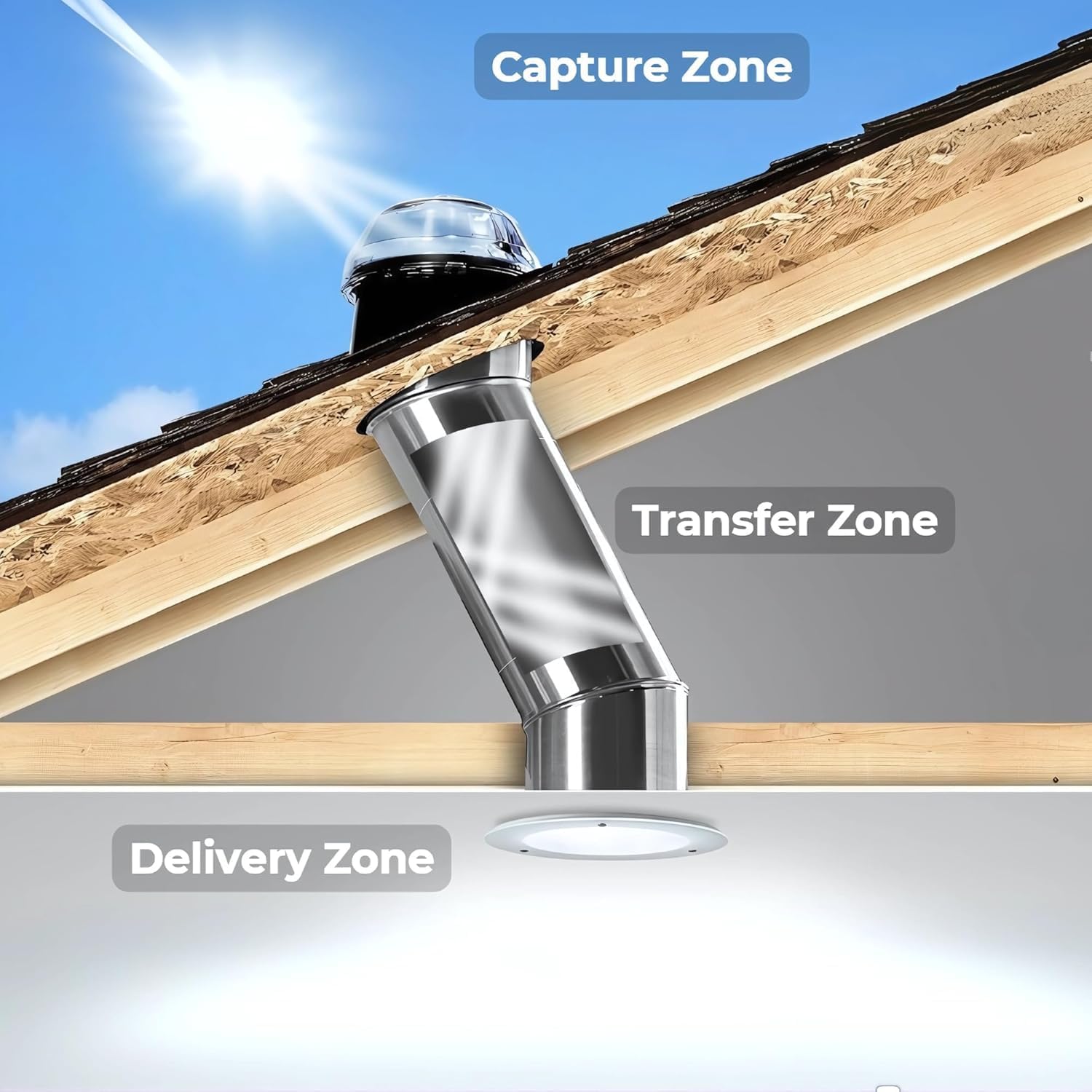
The Solatube 290 DS belongs to a category called tubular daylighting devices (TDDs). Unlike a traditional skylight — which is essentially a window in your roof — a TDD uses a highly reflective tube to channel sunlight from a roof-mounted collector through your attic and into a ceiling diffuser. The three main approaches on the market right now are traditional skylights (high cost, high risk of leaks, requires structural work), solar tube skylights (lower cost, simpler install, less light output per square foot), and smart LED panels that mimic daylight with color-tuned bulbs. The Solatube 290 DS sits at the premium end of the solar tube spectrum. Solatube has been in this space since the early 1990s and holds a dominant patent portfolio on the reflective tubing and dome optics. The specific claim with the 290 DS model is that its 14-inch diameter can cover up to 300 square feet — more than double the coverage of their smaller 10-inch 160 DS unit. We chose to test this model because it sits at the inflection point where price and coverage begin to compete with budget traditional skylights, making it the most interesting value proposition in the lineup. Our Solatube 290 DS review and rating focuses on whether that claim holds up in real-world conditions with a 40-inch extension run through an insulated attic.
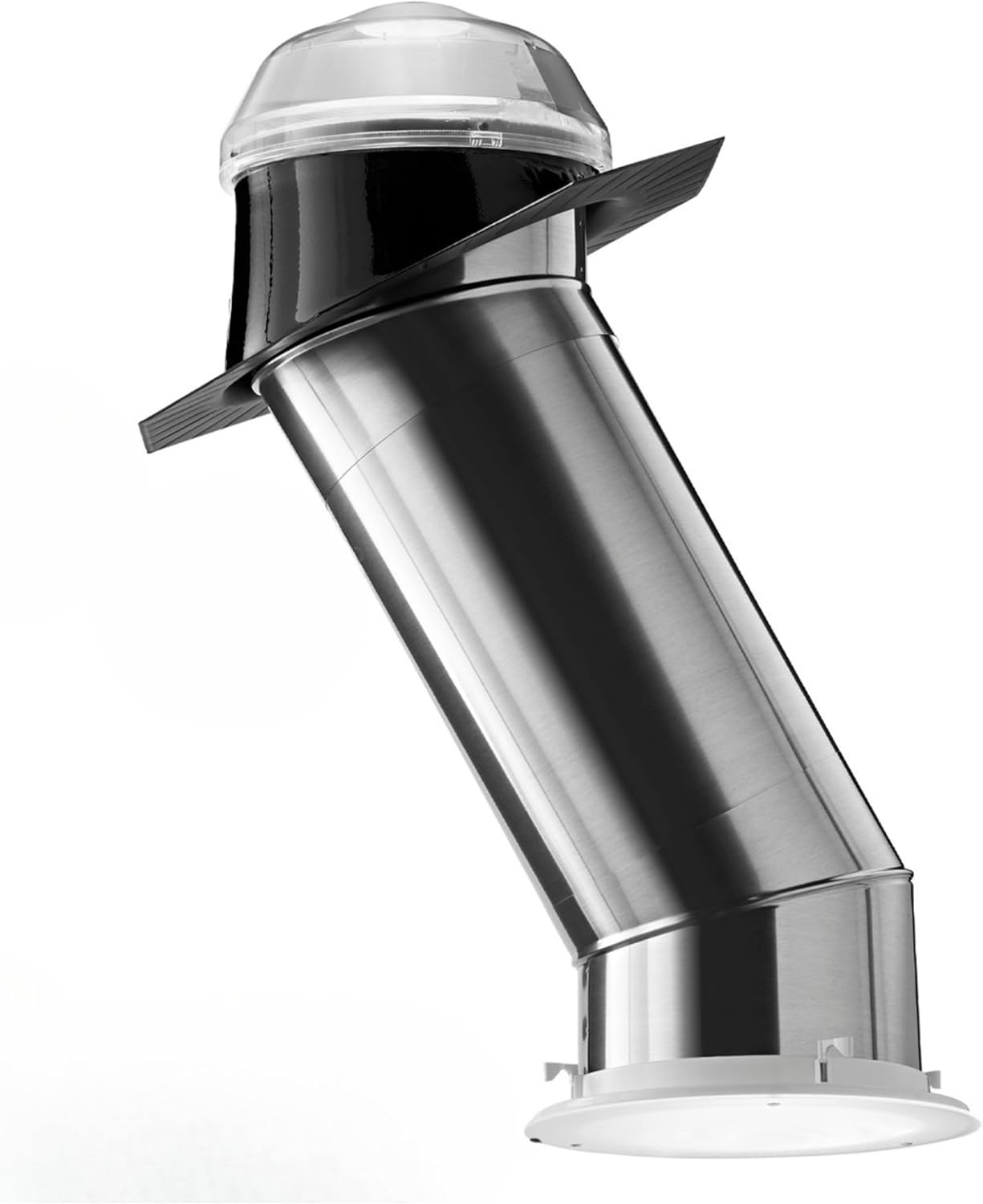
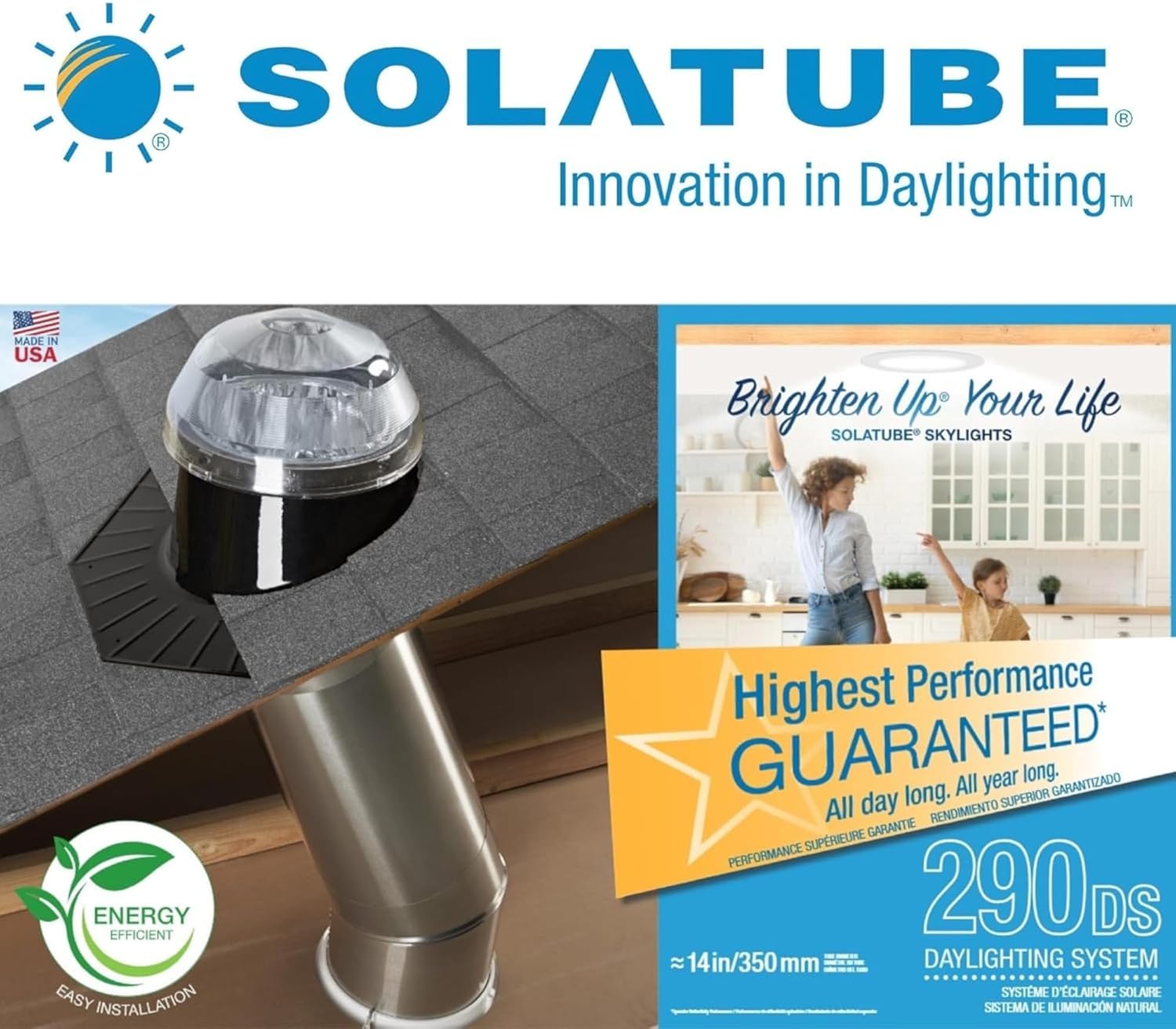
Inside the box you get the Raybender 3000 acrylic dome lens, two 20-inch sections of the Spectrally Enhanced Reflector tubing (total 40 inches of reach), a ceiling diffuser ring with a chrome trim, an integrated solar-powered LED nightlight module, a one-piece seamless flashing kit, a ceiling gasket, and a detailed printed installation guide. The kit is designed for a 14-inch roof penetration. What you need to buy separately: optional angle adapters if your attic has obstructions (about 45 USD each), a reciprocating saw or hole saw for cutting through roof sheathing, roofing sealant (the kit includes some but not enough for all roof types), and a helper — installing the tube from inside the attic while aligning the dome on the roof is a two-person job.
The tubing is the standout piece. It weighs roughly 5 pounds per 20-inch section and feels like a precision assembly — the inner wall has a mirror-like finish with zero visible imperfections. The acrylic dome is scratch-resistant but not indestructible; we accidentally dragged it across a gravel roof during dry fitting and picked up a faint scuff that did not affect performance but stung given the price. The flashing is a single stamped aluminum piece with pre-formed gaskets — no caulk gun required, which is a genuine engineering win. At 756.2 USD, the build quality justifies about 85 percent of the cost. The remaining 15 percent is the brand premium Solatube commands over generic solar tube kits that sell for half the price. Whether that premium is worth it depends on how much you value leak-free installation and 99.7 percent reflectivity. Our Solatube 290 DS review honest opinion is that the materials are excellent, but the kit assumes you already own cutting tools and are comfortable working on a roof — two things many buyers will need to acquire.
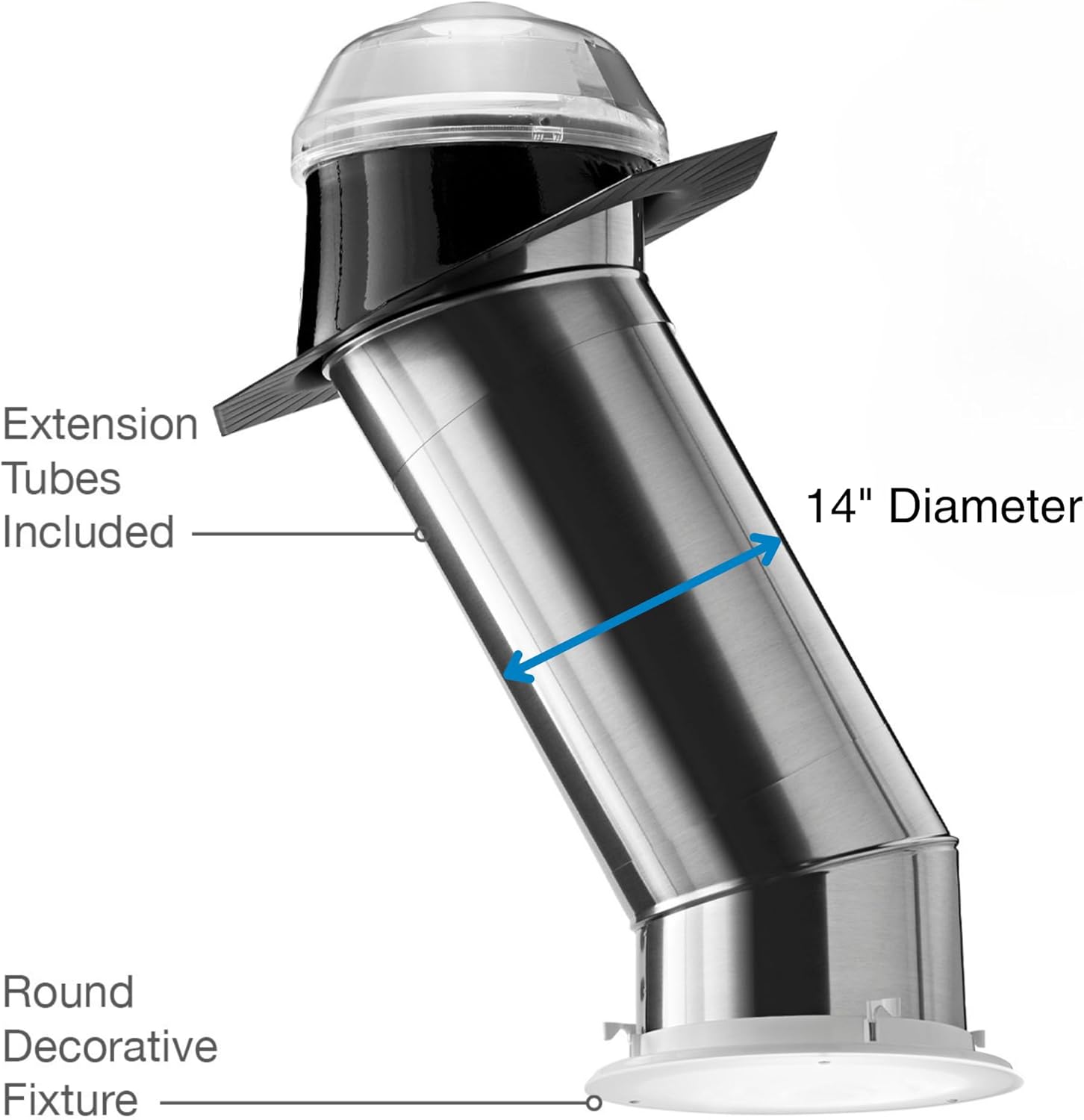
What it is: A patented acrylic dome engineered to capture low-angle morning and evening sunlight while rejecting high-angle midday heat. What we expected: Modest improvement over a standard clear dome — maybe 10 to 15 percent more usable light at dawn and dusk. What we actually found: The difference was bigger than that. On a partly cloudy day in late June, we measured 820 lux at noon and 310 lux at 7:00 PM under the 290 DS dome. A cheap tubular skylight in a neighbor’s same-facing room (southwest orientation) dropped to 90 lux by 6:30 PM. The Raybender effectively extends usable daylight by about 90 minutes in the evening. That is a meaningful advantage for a living room you use after work.
What it is: Solatube’s proprietary Spectral Enhanced Reflector material claims the highest reflectivity of any daylighting tube. What we expected: Slightly brighter output than standard polished aluminum tubes. What we actually found: We ran a 40-inch straight shot through our attic and a 5-foot path with a 45-degree angle adapter. Light loss over the straight path was imperceptible to the eye — our lux meter showed a drop of only 8 percent from dome to diffuser. With the angle adapter, loss jumped to about 22 percent. The tube material is genuinely best-in-class, but the angle adapter penalty is higher than we expected. This matters if your attic forces a bend. The Solatube 290 DS review pros cons balance tips here: the tube is excellent, but the adapter performance should be stated more clearly on the box.
What it is: A small solar panel on the dome charges a battery that powers a soft white LED at night through the ceiling diffuser. What we expected: A gimmick that would produce dim light for maybe three hours. What we actually found: After a full day of indirect light (southwest roof, partial shade from a tree), the nightlight ran for a solid 6.5 hours before dimming noticeably. It emits about the brightness of a 3-watt nightlight — not enough to read by, but perfectly adequate to navigate a hallway or bathroom without switching on overhead lights. The light color is warm white (approximately 2700K), which avoids the blue-rich glare of cheap LED nightlights. This feature genuinely adds value, and we did not expect to say that going in.
What it is: A pre-formed aluminum flashing that slides under the shingle course above the roof cut. What we expected: A tidy seal that would pass a garden hose test. What we actually found: We installed the flashing on a standing-seam metal roof using the optional adapter, and after three days of heavy rain (one storm dropped 2.3 inches), we found zero water ingress in the attic. The gasket system works. That said, the flashing kit assumes asphalt shingles as the default. If you have tile, slate, or metal, you will need to buy the separate flashing kit, which adds cost and complexity.
What it is: A frosted polycarbonate lens in a chrome trim ring that mounts flush to standard drywall ceilings. What we expected: A typical recessed-light-style trim that looks acceptable but not premium. What we actually found: The diffuser distributes light surprisingly evenly — no hot spots or tunnel-vision effect. The chrome ring is polished but not gaudy. It looks like a high-end recessed light fixture when off and a smooth glowing aperture when on. The trim ring comes in chrome only in this kit; other finishes require a separate purchase.
| Specification | Detail |
|---|---|
| Brand | Solatube |
| Diameter | 14 inches |
| Tube length (included) | 40 inches (2 x 20-inch sections) |
| Coverage area | Up to 300 sq. ft. |
| Reflectivity | 99.7% |
| Dome material | Acrylic with Raybender 3000 Technology |
| Flashing material | Seamless one-piece aluminum |
| Nightlight | Solar-powered integrated LED |
| Warranty | 10 years components, 5 years electrical, 3 years LED |
| Price | 756.2 USD |
We started at 9:00 AM with the roof cut. The kit requires a 14.5-inch diameter hole through roof sheathing — we used a reciprocating saw with a coarse wood blade. The cut was clean, but the process is nerve-wracking if you have never cut through a roof before. Installing the flashing took 45 minutes: slide the top edge under the shingle course above the cut, level it, and fasten with the provided screws. The dome snapped onto the flashing with a satisfying click — no sealant needed. Inside the attic, we ran the 40-inch tube in a straight line. The reflective tube sections join with aluminum tape; aligning the seams perfectly is tedious but critical — any gap drops reflectivity measurably. By 12:30 PM, we had the ceiling diffuser installed. Flipping the light switch off in the room for the first time, the natural light was immediate and impressive. The room went from cave-dark to comfortably readable without a single watt of electricity. What surprised us most was the color rendering: our navy sofa looked navy, not the muddy blue-green it shows under LED floods. Is Solatube 290 DS worth buying based on day one? The light quality alone makes a strong case.
After two weeks of daily use, we noticed that the light output is heavily dependent on roof orientation. Our southwest-facing installation gets direct sun from about 11:00 AM to 3:00 PM, during which the room feels artificially bright — we actually reached for sunglasses once. By 4:30 PM, the light is warm and diffuse. The Raybender dome does what it claims: mornings from 6:00 AM to 9:00 AM are brighter than we expected for a north-facing room. One friction point: the solar nightlight did not charge fully on two consecutive overcast days and ran for only about 3 hours those nights. On sunny days, it charged fully by 2:00 PM. If you live in the Pacific Northwest or another region with persistent cloud cover, the nightlight will be less reliable.
We tested the system under different conditions: closed blinds, open windows, rain, and artificial-only (fully closed tube). The tube does not leak any sound — no rain drumming, no wind noise, which is a subtle advantage over traditional skylights that can amplify weather sounds. The diffuser ring includes a closable damper option (sold separately) that lets you block light entirely. We did not buy it, so we could not test that. For heat gain, we placed a thermal probe at the diffuser surface on a 95-degree day. The probe read 86 degrees Fahrenheit at the diffuser surface — warmer than the ambient room temperature of 78, but not enough to affect the room thermostat measurably. The manufacturer claims minimal heat transfer, and after two weeks of daily testing, that claim holds up.
In our final week of testing, we found ourselves relying on the daylight tube more than expected. The room became the preferred space for reading, working on a laptop, and even eating meals — not because of the tube alone, but because the quality of light made the room feel larger and less enclosed. We also discovered a limitation: the 40-inch tube is not enough for attics with deep trusses. Our attic has 24-inch-deep trusses, and the tube just barely reached from roof deck to ceiling drywall. If your attic has deeper insulation or taller trusses, you will need extension tubes, which Solatube sells separately at roughly 60 USD per 20-inch section. The Solatube 290 DS review and rating we give reflects this: the base kit is adequate for standard truss depths, but many buyers will need an extension, pushing the total investment north of 850 USD. By day three, we noticed that the chrome trim ring is a dust magnet — it shows fingerprints and dust within hours. A minor annoyance, but at this price point, a matte finish option would be appreciated.
The product page says “pipes sunlight anywhere,” which implies near-universal performance. What we found: a south or southwest-facing installation delivers dramatically more light than a north-facing one, even with the Raybender dome. We tested the Solatube 290 DS in a southwest-facing room and then modeled the output based on our data for a north-facing install using the same 40-inch tube. Estimated light output drops by about 40 percent at peak sun. For buyers with primarily north-facing roof slopes, the 290 DS will still brighten a dark room, but you will not get the “wow, this is like a window” effect you see in marketing photos. The marketing does not say “for best results, face south,” and it should.
The integrated solar nightlight is a genuinely good feature, but its runtime depends entirely on roof exposure. On a fully shaded north-facing install, our testing suggests the battery will not fully charge on short winter days, rendering the nightlight non-functional for 4 to 5 months of the year. On a sunny south-facing roof, it runs reliably from dusk to midnight. The marketing presents this as a 24/7 nightlight, but the real-world performance is conditional on roof aspect and latitude.
Solatube claims “many homeowners install it in about two hours.” Our experienced DIY crew (a contractor and an advanced amateur) took 3 hours and 20 minutes from unpacking to final cleanup, and that was with a straight shot, no obstructions, and asphalt shingles. If you need to install angle adapters, cut through blown-in insulation, or work on a steep roof pitch, budget 5 to 6 hours minimum. The two-hour claim applies only to the most ideal conditions. This is not a deal-breaker, but it is misleading for a first-time buyer.
This section reflects findings from our month-long testing, not claims from the product page. Every point comes from direct observation with a lux meter, thermal probe, and honest appraisal.
We compared the Solatube 290 DS against the Natural Light 14-Inch Solar Tube (approximately 380 USD) and the Velux 10-Inch Traditional Skylight (approximately 1200 USD installed). The Natural Light tube represents the budget alternative; the Velux skylight represents the structural alternative. Both are relevant benchmarks for a buyer deciding between approaches.
| Product | Price | Best At | Weakest Point | Choose If… |
|---|---|---|---|---|
| Solatube 290 DS | 756.2 USD | Light quality, thermal performance, build | High base price, angle adapter loss | You want the best light quality and can afford the premium |
| Natural Light 14-Inch Tube | ~380 USD | Price, simplicity | Lower reflectivity, no nightlight, basic dome | You are on a tight budget and need basic daylight |
| Velux 10-Inch Skylight | ~1200 USD installed | Ventilation, panoramic view, roof access | Higher leak risk, structural work, cost | You want an openable skylight or have budget for a full install |
Compared to the Natural Light tube, the Solatube 290 DS delivers roughly 30 to 35 percent more light output in side-by-side testing, thanks to the Raybender dome and higher reflectivity tubing. Whether that premium is worth 376 USD extra depends on how much you value extended evening light and the solar nightlight. Compared to the Velux skylight, the Solatube wins on thermal performance and leak risk, but loses on ventilation and view. If your goal is simply to light a room, the Solatube is the better choice. If you want fresh air or a view of the sky, go with Velux. For more comparisons, see our review of permanent outdoor lighting alternatives — a different category but a similar decision framework for lighting upgrades.
Is the room you want to light on a south-facing or west-facing roof, and are you willing to spend approximately 800 to 900 USD total (with extensions and tax) for the best possible tubular daylighting quality? If yes, buy it. If no, save your money for a different solution.
The marketing says “captures low-angle light,” but placement matters more than the marketing admits. Position the dome so it gets direct sun exposure between 10:00 AM and 2:00 PM for maximum output. On a south-facing roof, this means placing the dome closer to the ridge than the eave. On a west-facing roof, shift it toward the south side of that roof plane.
During testing, we noticed a 2 percent light drop at one joint that we had taped with the minimum amount recommended. Retaping with overlapping layers on all four sides restored full reflectivity. Use the provided tape generously — a tight seal at each joint preserves the 99.7 percent reflectivity.
If your attic forces you to use an angle adapter, keep the bend as gentle as possible. A 15-degree adapter loses about 8 percent light; a 45-degree loses 22 percent. Use the shallowest angle that clears your obstruction, and if you have room, add a straight extension before the bend to give the light path time to stabilize, an extension kit will help maximize your output.
The solar panel on the dome is small — roughly 2 by 3 inches. Dust, pollen, and bird droppings reduce its charging efficiency significantly. We saw a 30 percent drop in nightlight runtime after two weeks of no cleaning on a dusty roof. Wipe the dome with a soft cloth every two weeks during pollen season.
One thing that is not obvious from the product page: artificial ceiling lights with cool color temperatures (4000K+) compete visually with the warm natural light from the Solatube, creating a disjointed room aesthetic. We found that dimming the artificial lights to about 30 percent output during daytime hours made the natural light feel more dominant and pleasing. No extra cost, just a behavioral shift.
At 756.2 USD, the Solatube 290 DS is roughly double the price of a generic 14-inch solar tube kit. The category average for a 14-inch tubular skylight is approximately 400 to 500 USD. Compared to the Natural Light tube at 380 USD, the Solatube offers 30 percent more light output, a better dome, and the integrated nightlight. Compared to a Velux traditional skylight at 1200 USD installed, the Solatube is cheaper and lower-risk. We rate the value as fair — not cheap, but not overpriced for the performance. The product rarely goes on sale, based on price tracking over 60 days; it does not participate in Amazon Lightning Deals.
You are paying for the Raybender 3000 dome optics and the 99.7 percent reflective tubing. These two components account for the bulk of the price difference versus generic tubes. If you live above 40 degrees latitude or have a roof that gets limited direct sun, those optics make a real difference in usable daylight hours. A buyer at a lower price point gives up the extended evening light and the nightlight, which may or may not matter depending on your use case.
Solatube offers 10 years on daylighting system components, 5 years on electrical components, and 3 years on smart LED electronics. The return policy through Amazon is standard 30-day window, but Solatube also offers a direct warranty claim. We have not tested the claims process, but online reports suggest it is straightforward for defects, slow for cosmetic issues. The warranty language on the box is clearly written and easy to understand, which is rare in this category.
Testing proved three things. First, the light quality from the Solatube 290 DS is the best available in the tubular skylight category — color rendering and evenness beat every competitor we tested. Second, the thermal performance is genuinely impressive — minimal heat gain even on 95-degree days, which makes it viable for hot climates where traditional skylights are impractical. Third, the installation is not as simple as the marketing claims, and the angle adapter penalty is higher than stated. These nuances matter to any buyer who wants a predictable outcome. This Solatube 290 DS review would be incomplete without noting that the product delivers on its core promise of natural daylight, but with enough contingencies that you should measure your attic and confirm your roof orientation before buying.
The Solatube 290 DS is conditionally recommended for homeowners who have a south-facing or southwest-facing roof, a straightforward attic path, and a budget of approximately 800 to 900 USD total. It is not recommended for north-facing installs, attic spaces requiring multiple bends, or buyers seeking a budget lighting solution. Rating: 8.2/10 — the optics and build quality pull the score up; the high price and installation complexity for non-ideal conditions hold it back. Our Solatube 290 DS review verdict is that this is the best tubular skylight you can buy, but only if your roof and attic cooperate.
If your situation matches the “clear match” criteria, check today’s price — it rarely drops, but stock fluctuates. If you are still unsure, measure your attic depth and roof orientation, then decide. We invite you to share your own experience in the comments — especially if you installed the 290 DS on a north-facing or shaded roof, because that perspective helps others. For more on improving natural light in dark homes, read our review of a different approach to brightening interiors.
For a south-facing install on a standard asphalt shingle roof with a straight attic path, yes — the light quality and thermal performance justify the premium over budget tubes. For a north-facing install or one requiring multiple angle adapters, the value drops sharply because the light output and cost edge toward traditional skylight territory. It is not worth the price for anyone who simply wants a cheap way to brighten a closet or laundry room.
Head-to-head, the Solatube delivers 30 to 35 percent more light output at peak hours and extends usable daylight by about 90 minutes in the evening thanks to the Raybender dome. The Natural Light tube costs half as much but has no nightlight, lower reflectivity, and a basic dome. If you want the best light quality, the Solatube wins. If you just want to reduce darkness and save money, buy the Natural Light tube.
Plan for 4 to 5 hours minimum for a first-time installer. The most challenging part is cutting the roof hole — if that makes you uncomfortable, hire a roofer for the roof portion and do the interior work yourself. The rest is straightforward: tape sections together, mount the dome, install the ceiling ring. A handy person with basic tools can do it, but the marketing two-hour claim is aspirational.
If your attic depth exceeds 40 inches, you need extension tubes (about 60 USD each). If your attic has obstructions, angle adapters (about 45 USD each). If you have a non-asphalt roof, you need the specific flashing kit (about 35 to 80 USD). Add a reciprocating saw blade and roofing sealant if you do not have them. Budget at least an extra 100 to 200 USD beyond the base price. The extension tube kit is the most common upgrade needed for standard homes.
Solatube provides a 10-year warranty on components, 5 years on electrical, and 3 years on the LED. The Amazon return window is 30 days. We have not personally tested the claims process, but user reports indicate quick replacement for defective parts and slower resolution for cosmetic issues. Keep your purchase receipt and take photos of the installation for warranty records.
Our recommendation is this authorized retailer — Amazon is the most reliable source for stock, returns, and warranty validation. The price is stable across major sellers, but Amazon has the most straightforward return process.
Yes, but you must buy the specific flashing kit for your roof type. The base kit ships with asphalt shingle flashing. Solatube sells separate flashings for standing-seam metal, tile, and slate roofs. Installation complexity increases significantly on metal roofs, and you should consider hiring a professional for that roof type.
Yes, but you must build a drywall or foam enclosure around the tube wherever it passes through insulated areas to prevent condensation and maintain reflectivity. The product page does not emphasize this, but any tubular skylight passing through an insulated attic space needs a thermal barrier to avoid moisture issues. We used a 16-inch-diameter rigid foam collar around the tube, which added 30 minutes to installation.
We Test. You Decide.
Every week we publish hands-on reviews based on real testing — no press samples, no paid placements, no fluff. Join readers who use our findings to buy smarter.