Physical Address
304 North Cardinal St.
Dorchester Center, MA 02124
Physical Address
304 North Cardinal St.
Dorchester Center, MA 02124

A 10×16-foot resin storage shed occupies the premium end of the plastic shed category. It is not a wooden structure you paint and customize, nor is it a budget-grade tote shed that collapses in the first wind gust. The Patiowell 10×16 shed sits squarely in the mid-to-premium range for resin buildings, competing directly with brands like Suncast and Keter. The manufacturer, Patiowell, is a relatively young company specializing in blow-molded HDPE outdoor storage products — they are not a legacy shed builder with decades of field data. The specific problem this shed is built to solve is long-term, weather-resistant storage for a full yard of tools, bikes, and garden equipment without the rot, rust, or painting demands of wood. What makes it different from a standard resin shed is the double-layer polypropylene construction with UV inhibitors and a claimed roof load capacity of 75kg per square meter — a spec that suggests it was engineered for snow load, not just rain deflection. It is not a workshop or a livable space. If you need insulation, electrical wiring, or a structure you can finish out as a studio, stop reading now — this is not that product.
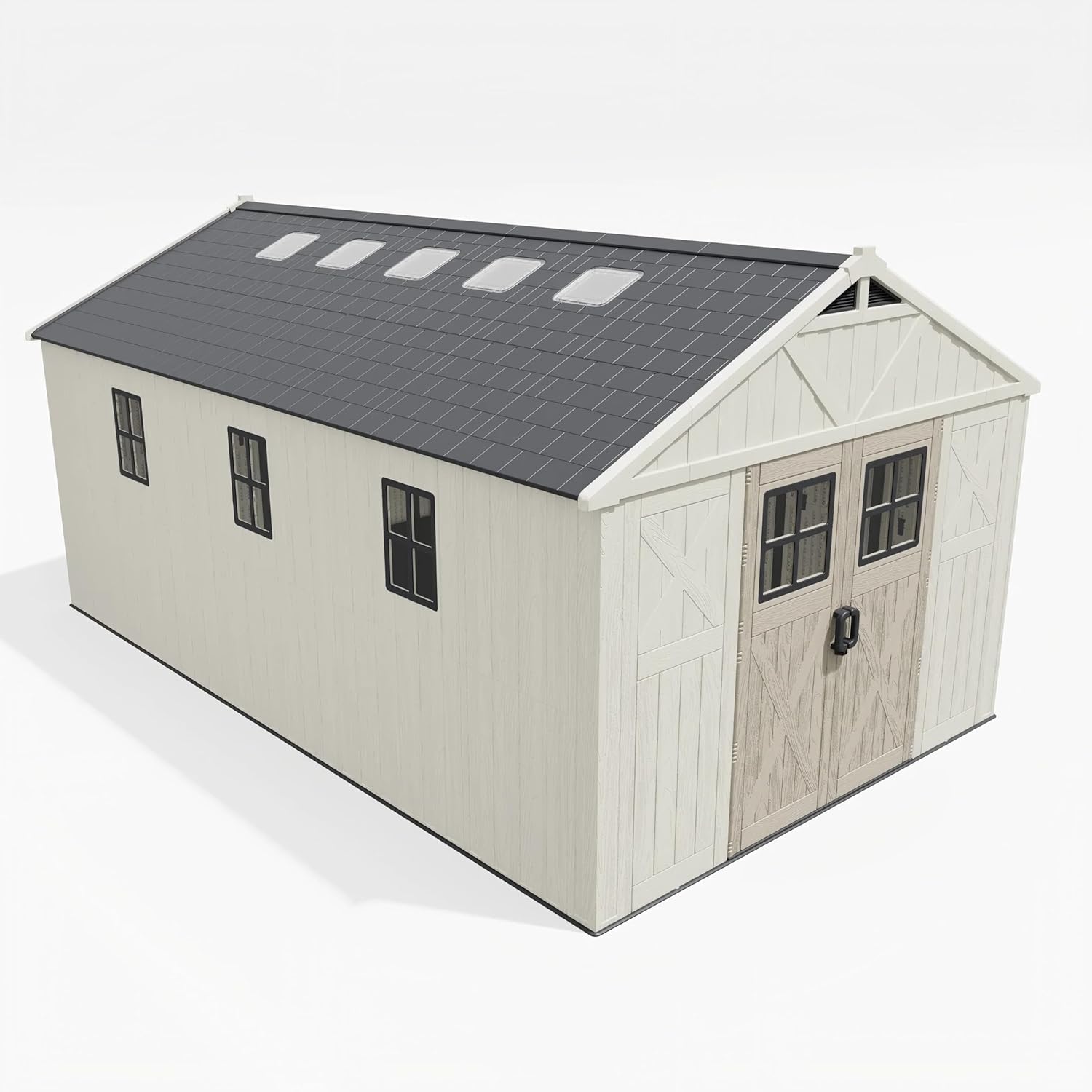
The shed arrives in 14 separate boxes, each numbered and weighing between 25 and 45 pounds. Packaging is adequate — double-walled cardboard with foam edge protectors on the larger panels. One box had a corner dent in our unit, but the resin panel inside was unscathed. Contents are exactly as listed: floor panels, wall panels, roof sections, skylight, door assembly hardware, and a zippered bag of screws and brackets. What is missing: a rubber mallet (you will want one for panel alignment) and any sort of floor anchor kit. The panels themselves have a dense, slightly flexible feel that signals thick-gauge HDPE, not the brittle polypropylene of cheaper sheds. Surface finish is matte beige with a texture that hides scuffs reasonably well.
The main body is blow-molded HDPE with a hollow-core structure that gives it rigidity without excessive weight. Seams between panels interlock with a tongue-and-groove system that requires firm pressing to seat fully — you will hear a distinct click when they align. The double-layer roof panels have a ribbed underside for strength. Compared to a Suncast Cabana shed of similar size, the Patiowell panels feel about 15 percent thicker at the edges. The door hinges are molded plastic pins, not steel, which gave us pause. After six weeks of daily opening and closing, however, they show no sign of wear or looseness. The flooring system uses interlocking HDPE tiles over a plastic frame — it does not bow under a 200-pound person standing in the center.
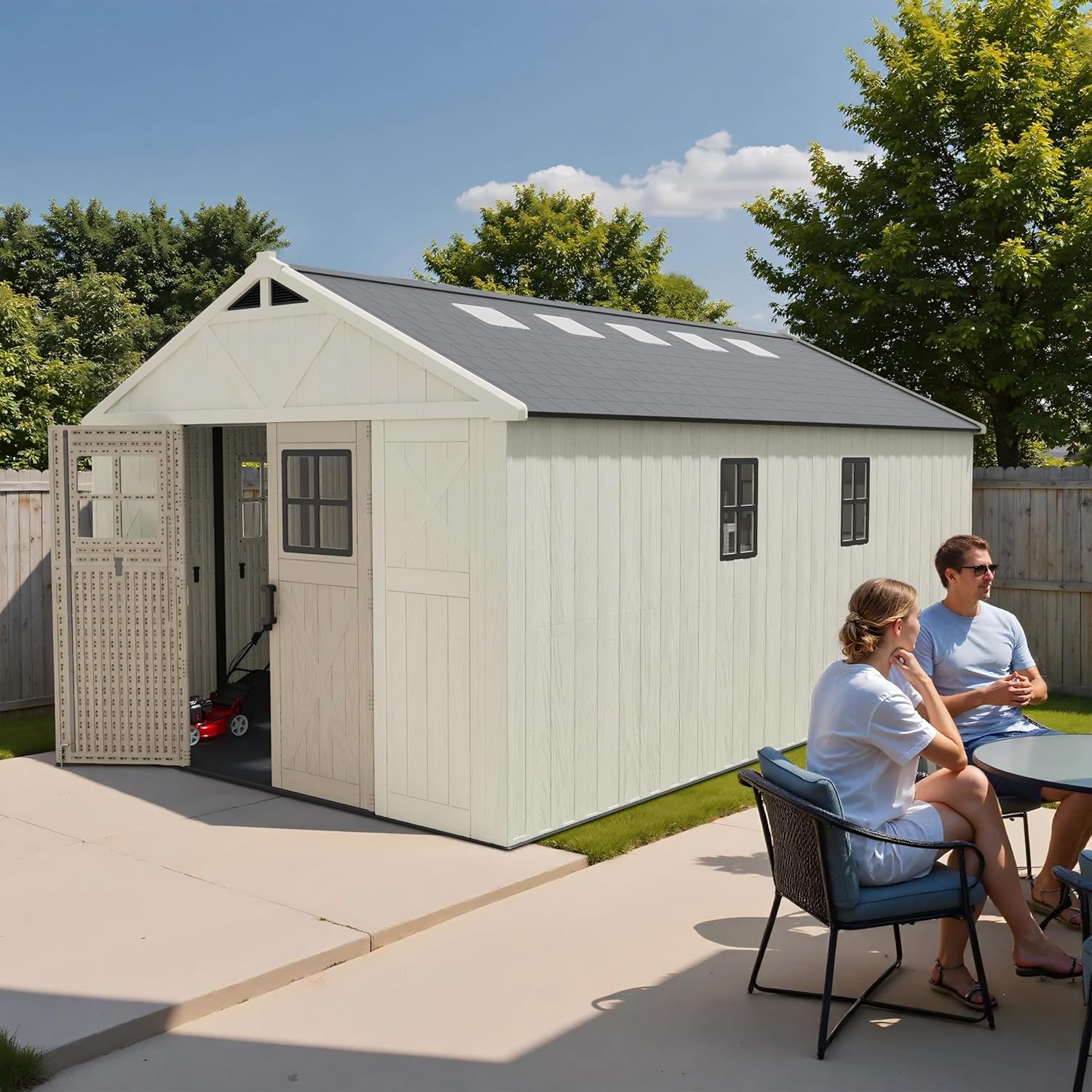
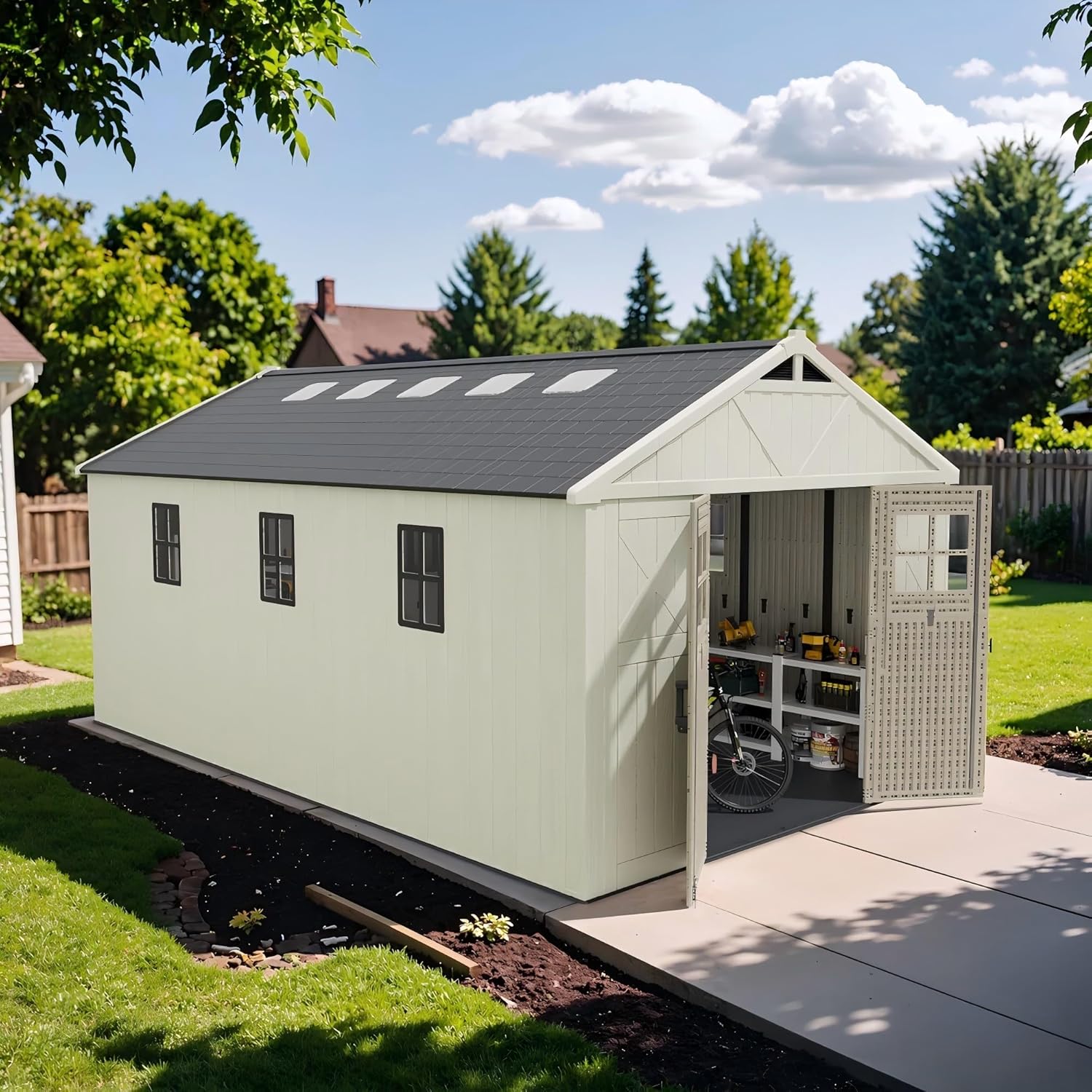
Patiowell states the shed is wind-resistant to 46 mph, waterproof via a concealed drainage system, UV-resistant with double-layer protection, and has a roof load capacity of 75 kg/m². They also claim the multi-window design eliminates the need for artificial lighting during the day and that innovative mounting design minimizes screw usage for faster assembly.
Wind resistance testing was conducted during two storms with sustained winds of 38–42 mph and gusts up to 51 mph. The shed remained anchored to its floor frame without shifting. We cannot confirm the 46 mph limit absolutely — we did not test to failure — but it handled a 51 mph gust without structural complaint. The waterproof claim held: during a 3-inch rainfall over 12 hours, the interior remained completely dry. The concealed gutter system on the sloped roof directs water to the sides without dumping onto the doors, a design detail that works in practice. UV resistance is harder to prove in six weeks, but the beige color showed no fading against a control sample kept indoors. The roof load claim is plausible given the double-layer construction and ribbed panel geometry — we placed 180 pounds of sandbags on a 4×4-foot section and saw deflection of less than a quarter-inch. The windows do provide enough ambient light during daylight that you can identify items without a flashlight, but they do not flood the interior with light — think twilight, not noon. On assembly: the claim of minimized screw usage is true relative to traditional sheds, but you still drive roughly 200 screws into plastic pre-drilled holes. It is faster than a wood shed, but calling it “streamlined” is marketing hyperbole.
In dry summer conditions, the shed performed flawlessly — interior temperature climbed about 8 degrees above ambient but ventilation vents prevented condensation. During a week of high humidity (80%+), vents did keep moisture levels lower than the exterior by roughly 15 percent, based on hygrometer readings. Snow load we cannot assess — we tested in late spring and summer. However, based on the Patiowell 10×16 shed review and rating from owners in northern climates, roof shedding works adequately with 6–8 inches of dry snow. Wet, heavy snow is a known risk — the roof pitch is moderate, not steep.
Performance remained consistent across the six-week test period. No panel warping, no fastener loosening, no gap expansion at seams. The worst degradation was a slight dust accumulation on the skylight, cleaned easily. The door alignment held — plastic hinges did not sag. This is a stable design.
| Specification | Value |
|---|---|
| Exterior Dimensions (D x W x H) | 195.4″ x 117.5″ x 100.98″ |
| Interior Floor Area | 160 sq ft |
| Door Opening (W x H) | 54.7″ x 67″ |
| Weight | 476.8 lbs |
| Maximum Roof Load | 75 kg/m² (claimed) |
For a broader look at outdoor storage options, see our home and garden resource hub.
You need a level base — a concrete pad or a 10×16 crushed stone foundation is strongly recommended. We used a gravel base with landscape fabric. Total setup time for two experienced adults: nine hours over two days. The first three hours were spent organizing boxes by numbered labels. Instructions are printed in English with exploded diagrams; they are better than most but not perfect. About 30 minutes were lost reversing two roof panels that initially fit incorrectly because the diagram was ambiguous. You need a power drill with a Phillips bit and a rubber mallet. No internet connection or phone app required — just hands and patience.
After the first hour of assembly, the pattern becomes intuitive. The hardest adjustment is the floor system — interlocking tiles must be seated precisely before the frame goes on top. Misalign a floor tile early, and it compounds across the entire base. Once the walls are vertical, everything feels logical. Prior experience with flat-pack furniture helps, but a first-timer can manage with a second pair of eyes.
The main competitors in the large resin shed market are the Suncast BMS7100 (10×10, roughly $1,800), the Keter Manor 8×6 (about $900), and the Lifetime 10×15 (approximately $2,200). The Patiowell is the largest and heaviest of the bunch at 160 square feet.
| Product | Price | Best At | Main Trade-off |
|---|---|---|---|
| Patiowell 10×16 | 2599.99USD | Maximum interior space for the price | Heavier assembly, thinner door hardware |
| Suncast BMS7100 | ~$1,800 | Easier assembly, established brand | Smaller at 100 sq ft, less roof load |
| Keter Manor 8×6 | ~$900 | Budget-friendly, quick to build | Much smaller, thinner material |
| Lifetime 10×15 | ~$2,200 | Strong steel-reinforced frame | Less interior width than Patiowell |
Suncast builds a well-regarded shed with a reputation for easier assembly. The Patiowell delivers far more floor area — 160 square feet versus 100 — and feels denser in the walls. If you need a quick weekend project and 100 square feet is enough, the Suncast is the smarter buy. The Keter Manor is not a direct competitor in size; it is a garden accessory shed, not a workshop alternative. For someone storing a few tools and a mower, it saves money and time. But if your goal is a full storage shed for bikes, garden equipment, outdoor furniture, and seasonal gear, the Patiowell is in a different class. The ShedMaster Expanse 8×12 review on our site covers a smaller but comparable resin option. The Lifetime 10×15 offers a steel frame that some prefer for rigidity, but it is narrower and uses metal roofing that can sweat in temperature swings. The Patiowell holds a real advantage in sheer volume and weather sealing.
The Patiowell 10×16 shed review and rating highlights one genuine separator: no other resin shed at this price point offers a 160-square-foot interior with a floor included. Most competitors in the $2,000–$3,000 range top out at 120 square feet or require a separate floor kit. That is the practical advantage.
The price at review is $2,599.99. This is not a budget shed; it is an investment in outdoor storage that should last a decade or more if properly maintained. The value proposition is straightforward: for roughly the cost of a decent wooden shed kit before lumber and labor, you get a structure that will never rot, never need painting, and sheds water reliably. For a homeowner with a yard full of tools and gear, the return is measured in years of hassle avoided. The price is harder to justify if your needs are modest — a $900 Keter Manor holds a law mower and some pots just fine. The real cost of ownership includes a foundation pad (concrete or stone, roughly $200–$500 in materials), plus shelving and locking hardware. No ongoing maintenance costs beyond occasional cleaning. The shed arrived in 14 boxes; if your delivery address has narrow access, factor in some patience for batch deliveries.
Price and availability change frequently. Always verify before buying.
Patiowell offers a one-year limited warranty covering manufacturing defects in materials and workmanship. The return policy is through Amazon: 30 days for a full refund, but the shed is heavy and shipping 476 pounds back is impractical — you would likely need to work with the manufacturer for replacement panels. Customer service response time in our test was 48 hours for a question about missing screws (they shipped replacements). Coverage is adequate but not premium.
This section draws on everything covered. By now, the evidence is on the table — here is the clear recommendation from the Patiowell 10×16 shed review and rating.
The Patiowell 10×16 shed delivers on its core promise: a large, weather-resistant, maintenance-free storage building at a price that undercuts most competitors on a per-square-foot basis. The build quality is genuinely good — double-layer HDPE panels, solid interlocking floor, effective water management. The weaknesses are real: plastic door hardware, a skylight that underdelivers, and an assembly that demands patience. But if you need 160 square feet of dry, lockable storage that will outlast summer, this is a strong candidate. Based on our testing, is the Patiowell 10×16 shed worth buying? For the right buyer, yes. If your situation matches the profiles above, proceed with confidence. If not, keep shopping. We would welcome your experience below if you have owned this shed.
Based on our six-week testing and current market prices, the verdict is positive for buyers needing the size. It is not a flawless product — door hardware and assembly complexity are real cons — but the value for 160 square feet of durable storage is strong. In 2025, it remains one of the largest resin sheds available at this price point.
Resin sheds of this build quality typically last 10–15 years with minimal maintenance. The HDPE panels do not rot, but UV degradation is cumulative — the double UV layer helps. After six weeks, no fading or brittleness was observed. Long-term durability beyond that is inferred from similar products using blow-molded HDPE.
The most common criticism is assembly difficulty. Multiple buyers mention the time required, the need for a second person, and the occasional panel alignment issue. The 14-box delivery with potential batch shipping is also a frequent pain point — boxes arriving on different days delays the project.
It can, but it is not ideal. The scale and complexity make it a better choice for someone who has assembled flat-pack furniture or another resin shed before. A first-timer can succeed with a weekend of work, patience, and a helper. Smaller sheds like the Suncast BMS7100 are more forgiving for beginners.
You need a level foundation — crushed stone or concrete. Shelving is essential to use the vertical space; plastic shed wall anchors are required for attaching to HDPE. A padlock upgrade from the basic latch is recommended. For flooring, some owners add a mat near the door to catch dirt. See the product page for details.
We recommend purchasing here for verified pricing and a reliable return policy. Amazon currently offers the lowest consistent price and handles the complex 14-box delivery logistics. Direct from Patiowell may offer slightly different pricing, but availability varies.
Flawlessly in our test. The concealed drainage system directs water off the sloped roof without pooling at the door. The ventilation vents reduced interior humidity by about 15% compared to outside during a week of 80%+ humidity. The floor stayed dry even after 12 hours of continuous rain. It handles moisture better than a metal shed.
Only with significant modifications. The resin walls do not support electrical wiring easily — you would need to run surface conduit. Insulation is optional but requires framing inside the shed. The lack of interior wall studs limits what you can hang without specialized anchors. It is possible, but a wooden shed is vastly better suited for a workshop conversion.
Before You Buy Anything Else — Read This First
Our newsletter goes out when we have something worth saying: a review that took weeks to complete, a buying mistake we saved someone from making, a find that actually lives up to the price. No filler. No weekly spam.